

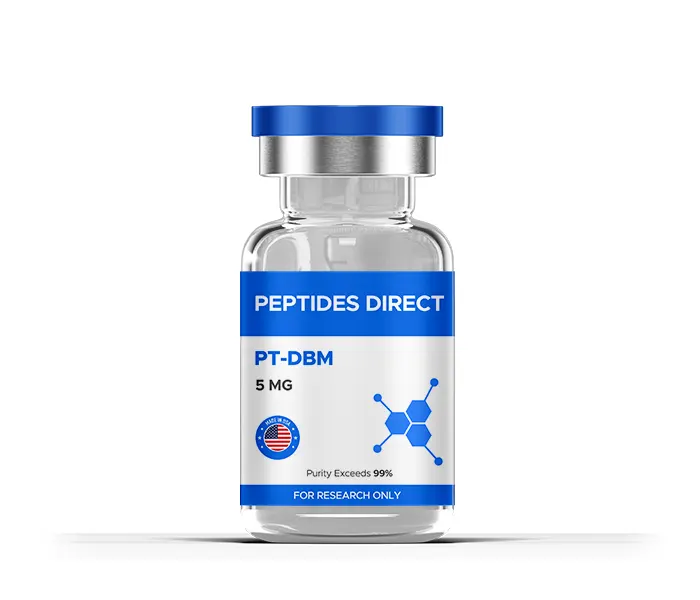


PTD-DBM (5mg)
$86.00
PTD-DBM peptides are Synthesized and Lyophilized in the USA.
PTD-DBM Peptide
PTD-DBM stands for Protein Transduction Domain-fused Disheveled Binding Motif. It is a synthetic peptide investigated across a range of research areas including tissue damage and hair follicle development. Researchers have focused specifically on the peptide within the context of follicle development, suggesting it may exert a stimulatory effect through interaction with endogenous proteins linked to follicle damage, known as CXXC5.[1] It was identified by Professor Kang-Yell Choi and his research team at Yonsei University in South Korea, who investigated the mechanisms underlying hair follicle loss and proposed that the Wnt/beta-catenin cellular pathway may be critical for follicle development.
The Wnt/beta-catenin pathway is frequently studied in the context of tissue development and regeneration. Wnt proteins are a family of secreted signaling molecules that bind to cell surface receptors, initiating a cascade of intracellular events. Beta-catenin is a protein that ordinarily resides in the cytoplasm of cells, but upon Wnt pathway activation, it is understood to accumulate and translocate to the nucleus, where it may activate the transcription of specific target genes involved in cell growth and differentiation. Beta-catenin activation may play a role in supporting and potentially enhancing hair follicle development, and may help initiate the anagen phase — the active growth stage of hair follicles — as observed in murine models.
It has been hypothesized that PTD-DBM may compete with CXXC5 for binding to Dishevelled (Dvl) proteins. Specifically, the peptide may inhibit the interaction between CXXC5 and Dvl by engaging the PDZ domain of Dvl, thereby interfering with CXXC5’s inhibitory influence on Wnt/beta-catenin signaling. This disruption may support the Wnt/beta-catenin signaling pathway and potentially promote the onset of the anagen phase. Data from murine studies suggest elevated expression levels of beta-catenin, alkaline phosphatase (ALP), and proliferating cell nuclear antigen (PCNA) — markers associated with cellular proliferation and hair follicle functionality — following peptide exposure.[1]
Specifications
Molecular Formula: C124H223N61O28S2
Molecular Weight: 3080.7 g/mol
Sequence: H-Arg-Arg-Arg-Arg-Arg-Arg-Arg-Arg-Gly-Gly-Gly-Gly-Arg-Lys-Thr-Gly-His-Gln-Ile-Cys-Lys-Phe-Arg-Lys-Cys-OH
PTD-DBM Research
PTD-DBM Peptide and Androgenetic Alopecia
Hair follicle growth is understood to occur across three phases — the anagen phase (growth), catagen phase (regression), and telogen phase (resting). Excessive androgen secretion, such as elevated testosterone, may reduce the duration of the anagen phase. In research models of androgenetic alopecia, Wnt/beta-catenin signaling appears to be among the primary cellular pathways involved in hair follicle development, initiated by the secretion of Wnt proteins.[2] These proteins appear to bind with Low-Density Lipoprotein-Related Protein (LRP), which may in turn deactivate glycogen synthase kinase-3beta (GSK-3beta) — an enzyme considered to suppress beta-catenin activity in the hair follicle. Once stabilized, beta-catenin appears to bind with the T-cell factor (TCF)/lymphoid enhancer factor (LEF), with the resulting proteins considered to regulate hair follicle cellular proliferation.
In the course of their research, Professor Kang-Yell Choi and team consistently observed that a protein designated CXXC-type zinc finger protein 5 (CXXC5) appeared to be excessively expressed in laboratory models of alopecia. CXXC5 appears to activate signaling pathways that downregulate Wnt/beta-catenin activity, an observation supported by ancillary studies in which murine models lacking CXXC5 expression did not develop baldness or patching.[3] CXXC5 appears to act through binding with Dvl proteins, with this CXXC5-Dvl protein-protein interaction (PPI) contributing to Wnt/beta-catenin pathway downregulation. As the pathway becomes suppressed, the generation of new hair follicles and the maintenance of existing ones may be disrupted, leading to hair loss. Animals exposed to PTD-DBM exhibited a comparable absence of baldness or patching to that observed in models where CXXC5 expression was entirely absent — suggesting that inhibiting CXXC5 may potentially attenuate hair loss associated with androgenic activity, specifically dihydrotestosterone (DHT), a recognized factor in androgenetic alopecia. It is proposed that DHT may exacerbate hair loss by promoting CXXC5 expression, which may subsequently suppress the Wnt/beta-catenin signaling pathway — considered a critical regulator of hair growth.
Based on these and other scientific findings, PTD-DBM is proposed to interfere with the CXXC5-Dvl protein-protein interaction, potentially increasing hair follicle growth and extending the duration of time follicles spend in the anagen phase of their development cycle. Findings from murine studies further suggest that PTD-DBM exposure may have contributed to hair regrowth and potentially triggered wound-induced hair follicle neogenesis (WIHN) — a process in which new hair follicles may form during wound healing.[5] These observations imply that PTD-DBM may play a role in promoting the anagen phase and could also be involved in initiating new follicle formation in response to skin injury.
PTD-DBM Peptide and Tissue Repair
Researchers have suggested that inhibiting “CXXC5 would represent a potential target for future [studies] aimed at improving wound healing.”[4] CXXC5 knockout mice examined in the referenced study reportedly demonstrated accelerated healing of skin lesions alongside increased keratin and collagen synthesis. PTD-DBM may prevent the protein-protein interaction between CXXC5 and Dvl proteins, upregulating the Wnt/beta-catenin pathway and potentially accelerating tissue repair processes. In murine models, PTD-DBM appeared to promote expression of beta-catenin alongside elevated levels of alpha-SMA and collagen I — suggesting the peptide may enhance fibroblast activity and collagen gel contraction, both considered critical steps in wound closure. The peptide also appeared to support fibroblast migration and stress fiber formation, processes recognized as important for wound repair and tissue regeneration.
Disclaimer: The products mentioned are not intended for human or animal consumption. Research chemicals are intended solely for laboratory experimentation and/or in-vitro testing. Bodily introduction of any sort is strictly prohibited by law. All purchases are limited to licensed researchers and/or qualified professionals. All information shared in this article is for educational purposes only.
References
- Lee SH, Seo SH, Lee DH, Pi LQ, Lee WS, Choi KY. Targeting of CXXC5 by a Competing Peptide Stimulates Hair Regrowth and Wound-Induced Hair Neogenesis. J Invest Dermatol. 2017 Nov;137(11):2260-2269. doi: 10.1016/j.jid.2017.04.038. Epub 2017 Jun 6. PMID: 28595998.
- Kim D, Garza LA. The Negative Regulator CXXC5: Making WNT Look a Little Less Dishevelled. J Invest Dermatol. 2017 Nov;137(11):2248-2250. doi: 10.1016/j.jid.2017.07.826. Epub 2017 Sep 27. PMID: 28967390; PMCID: PMC6399733.
- Ryu, Y.C.; Park, J.; Kim, Y.-R.; Choi, S.; Kim, G.-U.; Kim, E.; Hwang, Y.; Kim, H.; Han, G.; Lee, S.-H.; Choi, K.-Y. CXXC5 Mediates DHT-Induced Androgenetic Alopecia via PGD2. Cells 2023, 12, 555. doi: 10.3390/cells12040555.
- Lee SH, Kim MY, Kim HY, Lee YM, Kim H, Nam KA, Roh MR, Min do S, Chung KY, Choi KY. The Dishevelled-binding protein CXXC5 negatively regulates cutaneous wound healing. J Exp Med. 2015 Jun 29;212(7):1061-80. doi: 10.1084/jem.20141601. Epub 2015 Jun 8. PMID: 26056233; PMCID: PMC4493411.
- Ryu YC, Lee DH, Shim J, Park J, Kim YR, Choi S, Bak SS, Sung YK, Lee SH, Choi KY. KY19382, a novel activator of Wnt/β-catenin signalling, promotes hair regrowth and hair follicle neogenesis. Br J Pharmacol. 2021 Jun;178(12):2533-2546. doi: 10.1111/bph.15438. Epub 2021 May 5. PMID: 33751552; PMCID: PMC8251890.
Reviews
There are no reviews yet.