

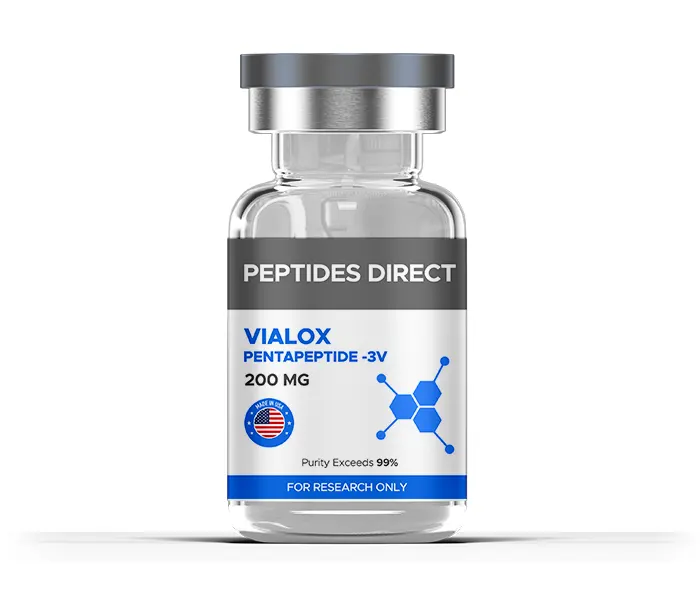
Vialox (Pentapeptide-3V) (200mg)
$210.00
Vialox (Pentapeptide-3V) peptides are Synthesized and Lyophilized in the USA.
Vialox (Pentapeptide-3V) Peptide
Vialox, also known as Pentapeptide-3V, is a peptide with a five amino acid sequence (Gly-Pro-Arg-Pro-Ala), originally isolated from endogenously produced snake venom. The peptide appears to replicate temporary muscular paralysis — an effect observed with paralytic compounds such as botulinum toxin, which are understood to reduce wrinkle depth. Vialox appears to inhibit nicotinic acetylcholine receptors, potentially enabling curare-like actions at the neuromuscular junction that may block nervous system electrical impulses from reaching muscles and ultimately halt muscle contraction.
This mechanism appears analogous to the function of tubocurarine, observed through Vialox’s proposed interaction with acetylcholine receptors on the postsynaptic membrane of muscle cells. Tubocurarine is a naturally occurring alkaloid compound found primarily in the bark of certain plants including Chondrodendron tomentosum — commonly referred to as curare — and is recognized as a potent neurotoxin. Its mode of action is classified as a non-depolarizing neuromuscular blocker, hypothesized to obstruct the activity of acetylcholine — a neurotransmitter considered critical for muscle contraction — at the neuromuscular junction, potentially inhibiting muscle contraction. [1]
Specifications
Sequence: Gly-Pro-Arg-Pro-Ala
Molecular Formula: C21H37N9O5
Molecular Weight: 495.58 g/mol
PubChem: CID 67073230
Synonyms: Pentapeptide-3V
Vialox Peptide Research
Vialox (Pentapeptide-3V) and General Studies
Vialox (Pentapeptide-3V) is of scientific interest due to its proposed capacity to disrupt nerve-muscle communication. Unlike some other nicotinic acetylcholine receptor (N-AChR) antagonists, Vialox appears to act exclusively on peripheral nicotinic acetylcholine receptors, with animal model studies suggesting limited influence on central neuronal receptors. The peptide appears to interfere with signal transmission between neurons and muscles, with researchers proposing it may function as an acetylcholine receptor antagonist capable of blocking nerve activity at the post-synaptic membrane — potentially leading to muscle relaxation.[2]
Scientific studies explain that once released from the nerve axon, acetylcholine travels to the neuromuscular junction and binds to receptors on the muscle cell membrane including N-AChRs. This binding may allow an influx of sodium ions into the muscle cell, initiating depolarization — the reduction of electrical charge across the cell membrane — which may trigger an electrical pulse leading to muscle contraction. Vialox has been investigated for its theoretical capacity to interrupt this process by attaching to N-AChRs and inhibiting acetylcholine binding at specific receptor sites on muscle cells. This inhibition is understood to likely prevent the subsequent opening of sodium ion channels considered critical for depolarization and muscle contraction. By interfering with acetylcholine receptor activity, Vialox may function as a non-depolarizing neuromuscular blocker, potentially contributing to the relaxation of smooth muscles found in various internal organs.[3]
The overall proposed action of Vialox involves decreased acetylcholine binding alongside a possible reduction in the frequency and intensity of muscular contractions, with forced relaxation typically observed following partial muscle paralysis. Studies have suggested the peptide may reduce muscle contractions by 71% within one minute of experimentation, with a 58% reduction in contractions reported two hours later. Gorouhi et al. commented that “in vitro studies showed that this product may have led to softened wrinkles and reduced skin roughness.”[3]
Vialox (Pentapeptide-3V) and Wrinkles
The skin aging process involves a decline in various skin cell populations — including astrocytes, which are theorized to contribute to the production of structural proteins such as collagen. Natural aging is also associated with declining levels of proteins including collagen and elastin, with reductions in these proteins contributing to increased wrinkling of the uppermost skin layers. According to studies conducted by specialists in the Department of Dermatology, Reddy et al. noted that “this product may be effective in smoothing and immediately tightening the skin.” Experimental models suggest that Vialox may eliminate wrinkles in approximately 50% of the experimental cohort and reduce skin surface roughness in approximately 47% of the cohort following 28 days of twice-daily exposure.[4]
Disclaimer: The products mentioned are not intended for human or animal consumption. Research chemicals are intended solely for laboratory experimentation and/or in-vitro testing. Bodily introduction of any sort is strictly prohibited by law. All purchases are limited to licensed researchers and/or qualified professionals. All information shared in this article is for educational purposes only.
References
- Husein el Hadmed, H., & Castillo, R. F. (2016). Cosmeceuticals: peptides, proteins, and growth factors. Journal of cosmetic dermatology, 15(4), 514-519.
- Lupo, M. P., & Cole, A. L. (2007). Cosmeceutical peptides. Dermatologic therapy, 20(5), 343-349.
- Gorouhi, F., & Maibach, H. I. (2009). Role of topical peptides in preventing or treating aged skin. International journal of cosmetic science, 31(5), 327-345.
- Reddy, B. Y., Jow, T., & Hantash, B. M. (2012). Bioactive oligopeptides in dermatology: Part II. Experimental dermatology, 21(8), 569-575.
Reviews
There are no reviews yet.