

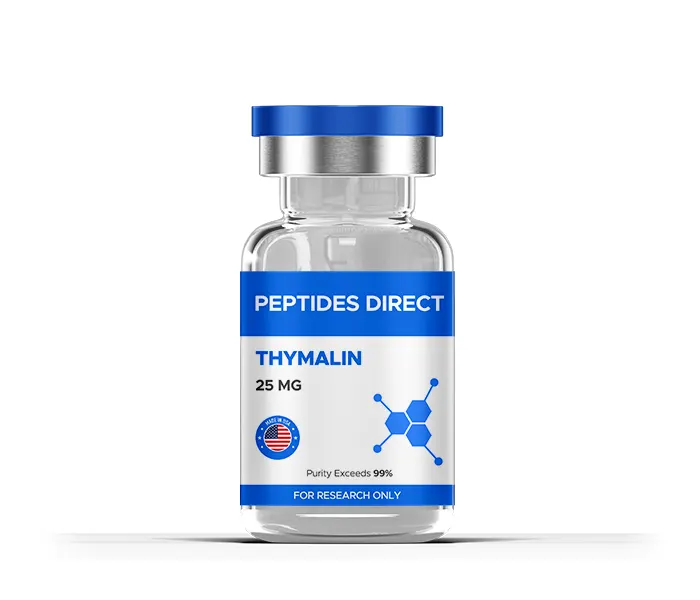
Thymalin (25mg)
$114.00
Thymalin peptides are Synthesized and Lyophilized in the USA.
Thymalin Peptide
Thymalin, sometimes referred to as Thymalin Alpha-1, is the synthetic variant of the endogenous Thymulin, which was first isolated from the thymus in 1977. The endogenously produced Thymalin has been researched for its potential in a wide landscape of research areas, with its influence speculated to extend to regulatory action on inflammation, mitigation of pain perception, neuroprotective action, and immune function support. Early studies have suggested that Thymalin and other thymus and pineal gland secretions may also support cell longevity.
Specifications
Other Known Titles: Nonathymulin, Thymic Factor, Serum Thymic Factor, Thymalin Alpha 1
Molecular Formula: C33H54N12O15
Molecular Weight: 858.86 g/mol
Sequence: Pyr-Ala-Lys-Ser-Gln-Gly-Gly-Ser-Asn
Thymalin Research
Thymalin and Cell Longevity
Research conducted in Russia in the early 21st century led scientists to hypothesize that Thymalin may potentially normalize various baseline physiological functions. The study reported improved cardiovascular, immune, and nervous system function tentatively associated with peptide exposure in murine models, with an overall significant reduction in acute respiratory disease, hypertension, osteoporosis, ischemic heart disease, and arthritis symptoms indicated. Models exposed to Thymalin throughout the study exhibited an apparent twofold reduction in mortality rate relative to controls.[1] Thymalin appears to act synergistically with certain thymic and pineal gland isolates, potentially modulating mortality rate by up to fourfold when combined with Epithalmin. Both the thymus and pineal gland are associated with cellular aging, with the pineal gland considered to protect the thymus from the degenerative effects of aging cells during optimal function.
Thymalin and Immune System Functionality
Thymalin research suggests the peptide may potentially modify cellular immunity and lymphocyte levels, thereby regulating T-cell differentiation and natural killer (NK) cell activity. It may be relevant in research involving chronic conditions such as diabetes, which tend to diminish immune support. Researchers have proposed that the peptide may improve immune correction, T cell proliferation, and control of retinal inflammation, with research in the context of diabetes also suggesting a potential role in reducing the progression of diabetic retinopathy.[2] Similar characteristics have been proposed in chronic immunodeficiency and immune dysregulation associated with HIV. Murine studies combining highly active antiretroviral therapy (HAART) with Thymalin appeared to have attenuated or reversed immune system damage and improved CD4+ T-cell counts in HIV models. Additional studies indicated that the peptide may have mitigated the onset of physiological changes, enhanced immune function, and reduced infection outcomes following surgical thymus removal, with rats reportedly exhibiting declining thymic function, weight loss, and decreased cell proliferation.
Thymalin and Cancer
Research in mice suggests that Thymalin may act synergistically with pulsed laser radiation in the context of certain cancer types. Neodymium lasers are frequently employed to address cancerous and precancerous skin lesions — including melanoma — with moderate to high success rates, particularly in cases of metastasis. A combination of Thymalin and radiation may be synergistic, as the peptide appears to influence the number of antibody-producing cells in the spleen, potentially exerting a stronger suppressive effect on tumors and achieving higher remission rates. Research in rats further suggested that sub-therapeutic concentrations of the molecule appeared to inhibit tumor growth in approximately 80% of examined cases and produced tumor regression in more than half of the animals studied.[3] Researchers noted that “high efficiency of Thymalin can be attributed to the use of lower [concentrations] of the substance and their modulation during the [exposure] course in accordance with the regimes of activation therapy.” When combined with plasmapheresis, the peptide demonstrated potential in chronic lympholeukemia research, with the combination appearing to engage in hematological compensation potentially exceeding that of standard chemotherapeutic compounds, alongside apparent improvements in lymphoid activity.
Thymalin and Psoriasis
Psoriasis is a specific inflammatory condition affecting the skin and joints. Combining standard psoriasis compounds with Thymalin has yielded improved laboratory measures of the condition,[4] with researchers suggesting the peptide may exert a measurable, observable influence on disease status.
Thymalin and Tuberculosis Research
Research models of progressive pulmonary tuberculosis underwent either a standard antibiotic control procedure or an antibiotic protocol supplemented with Thymalin. The Thymalin-exposed group demonstrated a higher recovery rate than the control cohort, with individualized combination approaches reportedly achieving an approximately 95% cure rate.[5] The peptide may hold potential in research into compound-resistant tuberculosis. Cases of low T cell count and reduced blast transformation — indicators of poor cellular immunity — may be further compromised when combined with diabetes, and the peptide has been investigated in such contexts with initial attenuatory findings.
Thymalin and Kidney Disease
Thymalin has been studied for its potential to improve the overall biological condition of research models of inflammatory kidney disease and chronic glomerulonephritis. One Russian research study reported the peptide to support kidney function and improve blood indices of inflammation,[6] with researchers observing enhancements in immunity that appeared to reduce kidney damage and delay the need for dialysis or kidney transplantation.
Thymalin and Circadian Rhythm Disturbances
Studies in rats have suggested that alterations in thymic factors may induce changes in circadian rhythms, leading to modified immune function. Seasonal variations in the day-night cycle may shift peak thymus activity, potentially suppressing the immune system and modifying antibody levels. Studies suggested that peptide exposure did not appear to reset circadian changes but rather appeared to support against immune depletion.[7] Researchers noted that “the chronic (18 mo) administration of thymus preparation thymalin increased FTS titer and promoted the appearance of the peak of antibodies,” suggesting the peptide may exhibit supportive activity in helping prevent infection.
Thymalin and Atherosclerosis Mechanisms
Research in rabbit models suggests that Thymalin may potentially regulate lipid levels and support plaque removal from arterial walls by lymphocytes. The peptide displayed potential hypolipidemic properties, suggesting it may reduce circulating lipid levels, alongside antiatherosclerotic actions — implying a possible capacity to reduce or inhibit the development of atherosclerotic plaques, which are accumulations of fat cells, cholesterol, and other substances within and on artery walls. Thymalin may normalize T-suppressor cell activity and sensitivity, potentially helping to control or eliminate immune dysfunction contributing to plaque formation.[8] T-suppressor cells are recognized immune regulators involved in inflammatory processes such as atherosclerosis, with enhanced sensitivity to atherogenic lipoproteins indicating an elevated inflammatory response to molecules considered critical in atherosclerotic lesion development. Through apparent normalization of T-suppressor cell activity and sensitivity to atherogenic lipoproteins, Thymalin may hold potential to address the immune dysfunction underlying certain cardiac conditions.
Thymalin and Inflammation
Periodontitis is an inflammatory condition of the gums and associated oral structures, with Thymalin having been studied for its potential influence in reducing inflammation and bacterial infections.[10] Severe emaciation induced by varying thyroid hormone levels may compromise immune function and peripheral lymphocyte prevalence, with Thymalin exposure in animal models appearing to reverse thymic atrophy in this context.[11] Zinc supplementation may additionally be required to support Thymalin activity, as researchers suggest peptide function may be regulated by zinc. Broader research into the peptide has suggested it may improve T cell function and thereby support various aspects of cellular immunity relevant to infection, inflammation, cancer, and cardiac disease.
Thymalin and Metabolism
A comprehensive study spanning six to eight years examined the metabolic potential of Thymalin — a synthetic peptide analog of a naturally occurring thymic hormone — using 266 mature test models with placebo control.[12] The investigation suggested that Thymalin may influence several basic physiological functions, potentially including those related to cardiovascular, neurological, and immunological systems. Both metabolic rates and hemostasis appeared to be favorably influenced by Thymalin, with the peptide hypothesized to sustain or potentially revitalize thymic functions — which are understood to gradually diminish with age.
This influence on thymic function may account for observed enhancements in T-cell-mediated immunity, with T cells appearing to show possible restoration in both quantity and functionality in Thymalin-exposed models. Preliminary results also suggested a potential reduction in markers of systemic inflammation, indicating that Thymalin may modulate cytokine production and immune cell regulation — potentially contributing to a decrease in chronic inflammation. The peptide’s influence on stress hormones, particularly cortisol, was also examined, with speculation that Thymalin may influence the hypothalamic-pituitary-adrenal (HPA) axis, potentially supporting more stable cortisol levels and reducing stress-related adverse effects. Possible improvements in metabolic stability were additionally observed, with suggested normalization of metabolic parameters including glucose levels and lipid profiles, pointing to a potential influence on metabolic processes through enhancement of cellular metabolism or direct action on metabolic enzymes.
Thymalin and Cellular Aging Rate
An investigative study in mature murine models reported a differential in average lifespan of 949 days in the control group versus 1048 days in the Thymalin-exposed group.[13] The aging rate — a metric reflecting the pace at which cellular aging biomarkers emerge — was measured at 0.0071 days in controls compared to 0.0041 days in the Thymalin group. Tumor cell occurrence was reduced by approximately 1.5 times in the Thymalin group relative to controls, with this reduction more pronounced in hematopoietic cancer cells — where tumor incidence was approximately 3.4 times lower in Thymalin-exposed models. Researchers propose that Thymalin may modify key aspects of the immune system considered important for cell regulation and the prevention of cancer cell development and spread. Further investigation may reveal that the constituent amino acids L-Glutamate and L-Tryptophan play a role in improved T-cell differentiation — T cells being vital components of the adaptive immune system recognized for identifying peptide-MHC complexes to initiate immune responses. The study also noted alterations in cyclic nucleotide levels — significant in cellular signaling pathways — alongside enhanced neutrophil chemotaxis and phagocytosis, both fundamental to the organism’s primary defense against pathogens and potentially malignant cells.
Disclaimer: The products mentioned are not intended for human or animal consumption. Research chemicals are intended solely for laboratory experimentation and/or in-vitro testing. Bodily introduction of any sort is strictly prohibited by law. All purchases are limited
References
- Khavinson, V. K.h, & Morozov, V. G. (2003). Peptides of pineal gland and thymus prolong human life. Neuro endocrinology letters, 24(3-4), 233–240.
- Zhaboiedov, H. D., Bychkova, N. H., Skrypnik, R. L., & Sydorova, M. V. (2001). Doslidzhennia stanu klitynnoho i humoral’noho imunitetu ta vyznachennia indyvidual’noï chutlyvosti T-limfotsytiv do imunokorektoriv u khvorykh s diabetychnoiu retynopatiieiu [Evaluation of cellular and humoral immunity and individual sensitivity of T-lymphocytes to immunocorrectors in patients with diabetic retinopathy]. Likars’ka sprava, (1), 53–56.
- Zhukova, G. V., Schikhlyarova, A. I., Barteneva, T. A., Shevchenko, A. N., & Zakharyuta, F. M. (2018). Effect of Thymalin on the Tumor and Thymus under Conditions of Activation Therapy In Vivo. Bulletin of experimental biology and medicine, 165(1), 80–83. doi:10.1007/s10517-018-4104-z.
- Isaeva, M. P., Budazhabon, G. B., & Kuznik, B. I. (1989). Vliianie timalina na pokazateli immuniteta i gemostaza u bol’nykh rasprostranennymi formami psoziaza [The effect of thymalin on indices of immunity and hemostasis in patients with disseminated forms of psoriasis]. Vestnik dermatologii i venerologii, (10), 42–43.
- Maslennikov, A. A., Kamenev, V. F., & Kolomiets, V. M. (2007). Problemy tuberkuleza i boleznei legkikh, (9), 30–33.
- Budazhabon, G. V., Kuznik, B. I., Morozov, V. G., Orlova, N. N., & Khavinson, V. K.h (1984). Sostoianie immunogeneza i gemostaza u bol’nykh s obostreniem khronicheskogo glomerulonefrita, lechennykh timalinom [Immunogenesis and hemostasis in patients with exacerbated chronic glomerulonephritis treated with thymalin]. Terapevticheskii arkhiv, 56(10), 62–66.
- Labunets’ I. F. (2001). Vikovi zminy tsyrkadnykh i tsyrkanual’nykh kolyvan’ velychyny imunnoï vidpovidi ta chysla klityn u limfoïdnykh orhanakh tvaryn: mozhlyvyĭ zv’iazok z faktoramy tymusa [Age-related changes in circadian and circannual fluctuations of the immune response and the number of cells in lymphoid organs of animals: a possible connection to thymic factors]. Fiziolohichnyi zhurnal (Kiev, Ukraine : 1994), 47(5), 54–62.
- Ryzhenkov, V. E., Ogurtsov, R. P., Trubacheva, V. V., Popov, V. G., & Puzyreva, V. P. (1988). Vliianie timalina na razvitie éksperimental’noĭ giperlipidemii i ateroskleroza [Effect of thymalin on the development of experimental hyperlipidemia and atherosclerosis]. Voprosy meditsinskoi khimii, 34(1), 51–56.
- Zhumadilov, Z.hS.h, & Terekhova, R. P. (1985). Primenenie timalina dlia profilaktiki posleoperatsionnykh gnoĭno-vospalitel’nykh oslozhneniĭ [Use of thymalin for preventing postoperative suppurative and inflammatory complications]. Klinicheskaia khirurgiia, (1), 36–38.
- Kuznik, B. I., Khavinson, V. K.h, Morozova, V. G., Budazhabon, G. B., & Budazhabon, N. G. (1985). Primenenie timalina dlia lecheniia bol’nykh parodontitom [Use of thymalin in treating periodontitis patients]. Stomatologiia, 64(1), 20–22.
- Wade, S., Bleiberg, F., Mossé, A., Lubetzki, J., Flavigny, H., Chapuis, P., Roche, D., Lemonnier, D., & Dardenne, M. (1985). Thymulin (Zn-facteur thymique serique) activity in anorexia nervosa patients. The American journal of clinical nutrition, 42(2), 275–280. doi:10.1093/ajcn/42.2.275.
- Khavinson VKh, Morozov VG. Peptides of pineal gland and thymus prolong human life. Neuro Endocrinol Lett. 2003 Jun-Aug;24(3-4):233-40. PMID: 14523363.
- Anisimov VN, Khavinson VK, Morozov VG. Immunomodulatory synthetic dipeptide L-Glu-L-Trp slows down aging and inhibits spontaneous carcinogenesis in rats. Biogerontology. 2000;1(1):55-9.
Reviews
There are no reviews yet.