

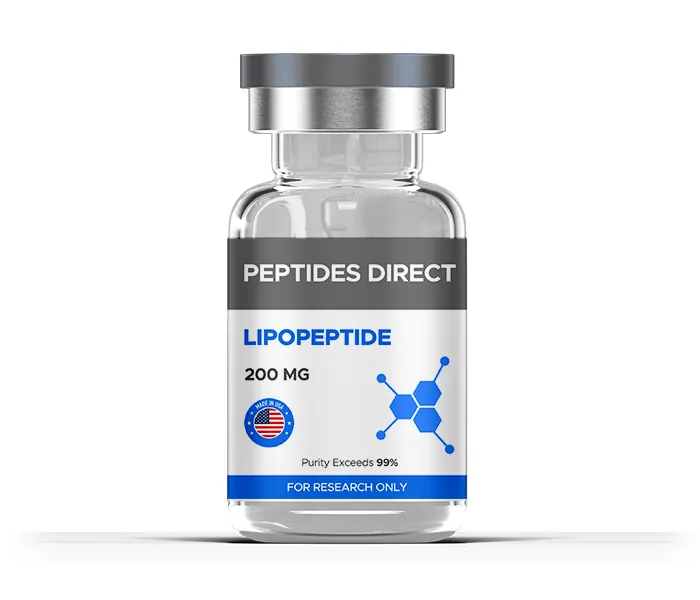
Lipopeptide (Biopeptide EL) (200mg)
$220.00
Lipopeptide peptides are Synthesized and Lyophilized in the USA.
Lipopeptide (Biopeptide EL) Peptide
Lipopeptide is a common designation for Biopeptide EL, also referred to as palmitoyl hexapeptide-12. As the name implies, this peptide is composed of six amino acids and incorporates a palmitic fatty acid addition. The inclusion of palmitic acid within the Lipopeptide structure is proposed to enhance penetration into the deeper layers of skin cell structures. The amino acid sequence of the peptide is valine-glycine-valine-alanine-proline-glycine (VGVAPG) — one of the most frequently occurring sequences found in naturally occurring proteins such as elastin and its precursor, tropoelastin.
By replicating fragments of elastin, the peptide is thought to interact with fibroblast cells and potentially influence the production of proteins vital to the skin’s extracellular matrix (ECM). Fibroblasts are a specialized subset of cells found in connective tissue — including the tissue that provides structural support for skin cells — and are capable of actively producing ECM proteins. Among the most significant of these are collagen, elastin, and hyaluronic acid. According to scientific research, Lipopeptide may potentially support the synthesis and development of collagen and hyaluronic acid within the ECM.[1]
Specifications
Sequence: Pal-Val-Gly-Val-Ala-Pro-Gly-OH or Palmitoyl – Hexapeptide-12
Molecular Formula: C38H68N6O8
Molecular Weight: 736.98g/mol
Synonyms: Oligopeptide-34, Biopeptide EL
Lipopeptide Research
Lipopeptide has been proposed to act primarily by supporting endogenous collagen and hyaluronic acid synthesis.[2] This effect may be mediated through interaction with fibroblast cell function and proliferation. The following details the latest laboratory research on these and related theoretical concepts.
Lipopeptide and Fibroblast Synthesis
Fibroblasts are specialized cells within connective tissues primarily responsible for producing and maintaining the ECM — a complex network of proteins and carbohydrates providing structural and biochemical support to surrounding cells. Among the critical components synthesized by fibroblasts are collagen, which imparts tensile strength to tissues, and hyaluronic acid, a glycosaminoglycan contributing to tissue hydration and elasticity. Lipopeptide is proposed to interact with fibroblast function, potentially upregulating collagen and hyaluronic acid production. Some experiments also suggest that due to the structural similarity between Lipopeptide and elastin, the peptide may exert negative feedback effects and reduce endogenous elastin synthesis by fibroblasts.
Lipopeptide and Fibroblast Proliferation
Lipopeptide appears to exert additional positive effects on fibroblasts through potential influence on their numbers. Researchers noted that “the present study clearly indicated that the hexapeptide VGVAPG stimulated skin fibroblast proliferation,”[3] suggesting that beyond potentially regulating fibroblast function, Lipopeptide may also support the generation of new fibroblast cells. The proposed mechanism underlying this proliferative effect may involve the VGVAPG sequence binding to as yet unidentified receptors on fibroblast plasma membranes.[4]
These plasma membrane receptors, when activated, may trigger intracellular signaling pathways within the cell. Although the specific receptors have not been fully characterized, such binding is hypothesized to initiate cascades leading to fibroblast proliferation. Research indicates there may be a lag phase before cell multiplication begins, potentially dependent on initial fibroblast population density — suggesting cellular response to VGVAPG may be influenced by the density at which cells are initially seeded. Additionally, fibroblasts exposed to VGVAPG may undergo morphological changes, potentially becoming more elongated — implying that VGVAPG may not only promote cell multiplication but also alter the structural organization and potentially the functional characteristics of fibroblasts within tissue.
Lipopeptide and Fibroblast Migration
Lipopeptide may additionally function as a chemoattractant, stimulating fibroblast migration toward sites where collagen or other ECM proteins are needed.[5] The VGVAPG sequence is proposed to potentially influence fibroblast cell movement in response to chemical signals such as repair cues. Researchers suggest that this interaction may not only facilitate cell migration but also contribute to tissue remodeling processes. Studies indicate that fibroblast responsiveness to VGVAPG may depend on their differentiation state — specifically, undifferentiated fibroblasts incapable of elastin production do not appear to exhibit chemotaxis toward VGVAPG or other elastin-derived peptides. However, once exposed to extracellular matrix material and following onset of elastin synthesis, these cells appear to become responsive. This suggests that elastin-producing capacity may be a prerequisite for fibroblast chemotaxis toward VGVAPG, potentially allowing the peptide to selectively attract mature and functionally active cells.
Lipopeptide and Collagen
Collagen is a fundamental extracellular matrix component, acting to support the skin barrier and understood to naturally decline in production over time. The same researchers who investigated Lipopeptide’s potential effects on fibroblast migration also suggest that skin cell exposure to the peptide may support a reduction in cellular aging and help maintain endogenous protein production. Lipopeptide exposure may potentially improve skin elasticity and hydration through sustained collagen synthesis, and may additionally promote production of other structural proteins including fibrillin and elastin.[5] Scientists also reported the peptide was “chemotactic for fibroblasts and monocytes, with optimal activity at approximately 10(-8) M.”
Lipopeptide and Skin Pigments
Research suggests Lipopeptide may interact with melanocytes — cells responsible for melanin production — potentially modulating or inhibiting melanogenesis-related pathways based on observed gene expression changes.[6] The peptide may downregulate genes critical for melanin production in melanocytes, potentially suppressing enzymes and transcription factors with key roles in melanogenesis including microphthalmia-associated transcription factor (MITF), tyrosinase, and dopachrome tautomerase. MITF regulates melanogenic enzyme expression, tyrosinase catalyzes the initial steps of melanin synthesis, and dopachrome tautomerase is involved in later stages of the pathway. By potentially inhibiting these proteins, Lipopeptide may reduce melanin synthesis and contribute to lighter pigmentation.
Additionally, Lipopeptide may act through activation (phosphorylation) of extracellular signal-regulated kinase (ERK), which can lead to MITF degradation and further reduction in melanin production. In vitro data from melanin synthesis models indicated that Lipopeptide may produce a marked reduction in melanin content, as evidenced by absorbance measurements reflecting lower melanin levels.[6]
Lipopeptide and Inflammation
Researchers suggest Lipopeptide may influence the production of proinflammatory cytokines in skin cells,[7] including interleukin-1 (IL-1), interleukin-6 (IL-6), and interleukin-8 (IL-8). By potentially modulating these cytokine levels, Lipopeptide may help attenuate degradation of the skin’s extracellular matrix. In vitro studies indicated that Lipopeptide may reduce IL-6 production in keratinocytes and fibroblasts. IL-6 is recognized as a significant inflammatory regulator — a biological response necessary for cell repair following injury or stress — though excessive or prolonged IL-6 production may contribute to chronic inflammation. Chronic inflammation has been associated with deterioration of skin structural integrity, potentially through activation of matrix metalloproteinases (MMPs) — enzymes capable of breaking down extracellular matrix proteins including collagen and elastin.[8] MMP overactivation may contribute to reduced skin elasticity and firmness alongside visible signs of skin aging such as wrinkle and crease formation. By potentially modulating IL-6 levels, Lipopeptide may also influence MMP activity and thereby contribute to ECM preservation[9] — potentially supporting collagen and elastin levels and maintaining skin cell integrity, elasticity, and resilience.
Disclaimer: The products mentioned are not intended for human or animal consumption. Research chemicals are intended solely for laboratory experimentation and/or in-vitro testing. Bodily introduction of any sort is strictly prohibited by law. All purchases are limited to licensed researchers and/or qualified professionals. All information shared in this article is for educational purposes only.
References
- Al-Atif H. Collagen Supplements for Aging and Wrinkles: A Paradigm Shift in the Fields of Dermatology and Cosmetics. Dermatol Pract Concept. 2022 Jan 1;12(1):e2022018. doi: 10.5826/dpc.1201a18. PMID: 35223163; PMCID: PMC8824545.
- Floquet N, Héry-Huynh S, Dauchez M, Derreumaux P, Tamburro AM, Alix AJ. Structural characterization of VGVAPG, an elastin-derived peptide. Biopolymers. 2004;76(3):266-80. doi: 10.1002/bip.20029. PMID: 15148686.
- Tajima, S., Wachi, H., Uemura, Y., & Okamoto, K. (1997). Modulation by elastin peptide VGVAPG of cell proliferation and elastin expression in human skin fibroblasts. Archives of dermatological research, 289(8), 489–492. https://doi.org/10.1007/s004030050227
- Kamoun, A., Landeau, J. M., Godeau, G., Wallach, J., Duchesnay, A., Pellat, B., & Hornebeck, W. (1995). Growth stimulation of human skin fibroblasts by elastin-derived peptides. Cell adhesion and communication, 3(4), 273–281. https://doi.org/10.3109/15419069509081013
- Senior RM, Griffin GL, Mecham RP, Wrenn DS, Prasad KU, Urry DW. Val-Gly-Val-Ala-Pro-Gly, a repeating peptide in elastin, is chemotactic for fibroblasts and monocytes. J Cell Biol. 1984 Sep;99(3):870-4. doi: 10.1083/jcb.99.3.870. PMID: 6547961; PMCID: PMC2113419.
- Widgerow, A., Wang, J., Ziegler, M., Fabi, S., Garruto, J., Robinson, D., & Bell, M. (2022). Advances in Pigmentation Management: A Multipronged Approach. Journal of drugs in dermatology : JDD, 21(11), 1206–1220. https://doi.org/10.36849/JDD.7013
- Ngoc, L. T. N., Moon, J. Y., & Lee, Y. C. (2023). Insights into bioactive peptides in cosmetics. Cosmetics, 10(4), 111.
- Schagen, S. K. (2017). Topical peptide treatments with effective anti-aging results. Cosmetics, 4(2), 16.
- Veiga, E., Ferreira, L., Correia, M., Pires, P. C., Hameed, H., Araújo, A. R., … & Paiva-Santos, A. C. (2023). Anti-aging peptides for advanced skincare: focus on nanodelivery systems. Journal of Drug Delivery Science and Technology, 105087.
Reviews
There are no reviews yet.