

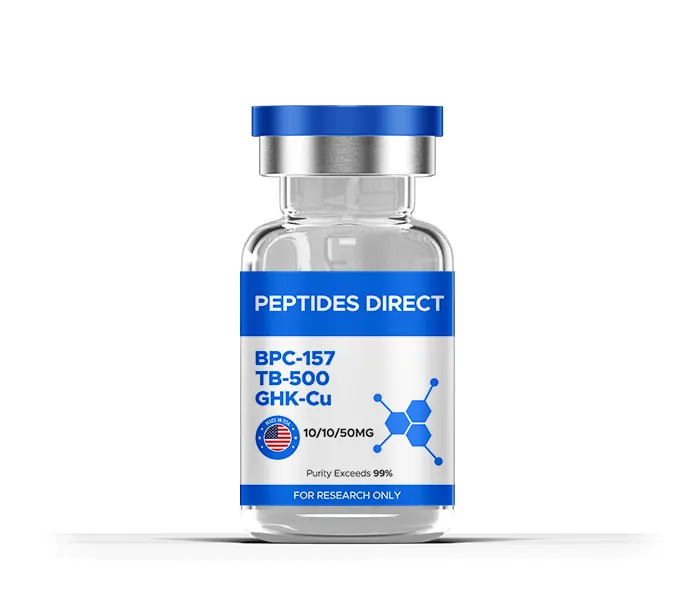
BPC-157 & TB-500 & GHK-Cu Blend (70mg)
$305.00
BPC-157 & TB-500 & GHK-Cu peptide blend is Synthesized and Lyophilized in the USA.
BPC-157, TB-500 & GHK-Cu Peptide Blend
The GHK-Cu, TB-500, and BPC-157 peptide blend — commonly referred to as the “Glow Blend” — is a composite research formulation investigated for its relevance to cellular repair signaling, angiogenic modulation, and extracellular matrix regulation. The formulation brings together three mechanistically distinct peptides that are frequently examined across regenerative and cytoprotective research models.
BPC-157 is a 15-amino acid peptide fragment originally derived from mammalian gastric juice.[1] It is studied for its proposed role in nitric oxide pathway modulation, growth factor signaling, and extracellular matrix remodeling. Experimental research suggests that BPC-157 may support angiogenic responses and cytoprotective mechanisms under conditions of cellular stress, potentially positioning it as a relevant molecular model for regeneration-focused research.
TB-500 is a synthetic peptide corresponding to a 43-amino acid sequence of thymosin beta-4.[2] It is investigated for its involvement in actin binding and cytoskeletal organization as observed in mammalian models. Preclinical findings suggest that TB-500 may regulate cell migration, angiogenesis, and tissue remodeling through modulation of actin polymerization and growth factor-associated signaling pathways — properties that position it as a model peptide for investigating cellular motility and structural repair processes.
GHK-Cu is a copper II-coordinated tripeptide composed of glycine, histidine, and lysine.[3] It is examined for its role in peptide-metal interactions, redox signaling, and metalloproteinase regulation. Research suggests that GHK-Cu may support collagen synthesis, antioxidant enzyme activity, and gene expression associated with extracellular matrix maintenance through copper-mediated biochemical pathways.
When assessed collectively, this peptide blend may be of relevance in research exploring molecular regeneration, cytoprotection, angiogenic signaling, and peptide-metal complex behavior. The combined formulation offers a framework for studying interconnected pathways involved in tissue remodeling, cellular communication, and regenerative biochemistry within mammalian research models.
BPC-157[4] Specifications
Molecular Formula: C62H98N16O22
Molecular Weight: 1419.5 g/mol
Other known titles: Booly protection compound 15, Bepecin
TB-500[5] Specifications
Molecular Formula: C212H350N56O78S
Molecular Weight: 4963 g/mol
Other known titles: Thymosin Beta 4
GHK-Cu[6] Specifications
Molecular Formula: C28H48CuN12O8
Molecular Weight: 744.3 g/mol
BPC-157, TB-500 & GHK-Cu Research
BPC-157 and Tendon Fibroblast Signaling Pathways
An in vitro study[1] investigated the effects of BPC-157 on cultured tendon fibroblasts isolated from murine tendon tissue. Fibroblast cultures were divided into control and peptide-exposed conditions, with observational findings suggesting that BPC-157 may support fibroblast outgrowth and cellular organization associated with tendon tissue repair.
Under experimentally induced oxidative stress conditions using hydrogen peroxide, BPC-157 appeared to support fibroblast survival relative to untreated controls. Additional observations suggest the peptide may promote fibroblast migration — a process relevant to cytoskeletal dynamics and tissue remodeling.
Molecular analysis using Western blot techniques indicated increased phosphorylation of p21-activated kinase and paxillin following BPC-157 exposure, while total protein expression levels remained unchanged — implying that BPC-157 may support intracellular signaling through post-translational modification rather than protein synthesis.
Further interpretation of the data suggests BPC-157 may modulate focal adhesion kinase and paxillin-associated pathways involved in F-actin formation. As F-actin is a structural cytoskeletal component involved in cell adhesion and motility, these mechanisms may be relevant for studying tendon fibroblast migration and organization during tissue repair.
BPC-157 and Systemic Tissue Damage Signaling Models
A separate experimental investigation examined the angiogenic and cytoprotective characteristics of BPC-157 across multiple tissue injury models — including gastrointestinal lesions, pancreatic injury, hepatic damage, cardiac tissue impairment, endothelial disruption, and alterations in vascular pressure regulation. Findings suggest that BPC-157 may support a broad network of biological responses rather than isolated local effects.[7]
Researchers proposed that BPC-157 may function within a broader peptidergic defense signaling system coordinating tissue protection and repair mechanisms. Observational data suggest potential involvement in inflammatory modulation, wound-associated signaling in mammalian models, and processes related to bone and connective tissue repair observed in laboratory settings.
Additional analysis explored interactions between BPC-157 and several neurotransmitter and signaling systems — including dopaminergic, nitric oxide, prostaglandin, and somatosensory pathways — dysregulation of which is commonly associated with organ-specific lesions in experimental models. The study suggests BPC-157 may counteract excessive activation or suppression within these signaling networks.
GHK-Cu and Tissue Repair-Associated Signaling
An experimental investigation[8] evaluated the effects of the GHK-Cu peptide complex on tissue repair-related processes using preclinical wound models. New Zealand white rabbits were allocated into groups receiving either the GHK-Cu peptide complex, zinc oxide, or a control formulation, with standardized tissue injuries introduced and comparative outcomes assessed over a defined observation period.
Findings suggest that specimens exposed to the GHK-Cu peptide complex may exhibit enhanced tissue organization and repair-associated characteristics relative to comparator groups, supporting continued study of GHK-Cu as a peptide-metal complex involved in extracellular matrix-related signaling and regenerative pathway modulation.
A separate investigation compared the biological activity of the GHK-Cu peptide complex with helium-neon laser-based stimulation in similar preclinical wound models. Distinct experimental groups were assessed under controlled conditions over an extended evaluation period, with analysis suggesting that GHK-Cu exposure may support inflammatory cell dynamics and neovascular-associated signaling in mammalian models. Observations indicated a potential reduction in neutrophil-associated responses alongside increased markers linked to vascular formation in GHK-Cu-exposed groups, positioning GHK-Cu as a research model for examining peptide-mediated regulation of inflammatory signaling and angiogenic processes.
GHK-Cu and Reactive Oxygen Species Modulation
An in vitro study[9] examined the role of the tripeptide glycyl-L-histidyl-L-lysine in regulating intracellular reactive oxygen species in mammalian models. The research focused on oxidative stress models induced by prooxidant compounds and assessed GHK’s capacity to support radical-associated signaling pathways. Flow cytometry analysis suggested that GHK may reduce overall reactive oxygen species levels under oxidative challenge conditions, with complementary electron spin resonance spin trapping techniques suggesting selective interactions between GHK and specific radical species.
Data indicated that GHK may preferentially interact with hydroxyl and peroxyl radicals while exhibiting more limited activity toward superoxide-related species. Comparative analysis with other antioxidant peptides and molecules suggested GHK may demonstrate a higher relative affinity for hydroxyl radical neutralization under laboratory conditions. Collectively, these findings support the study of GHK and GHK-Cu complexes in mammalian models as research tools for investigating redox regulation, peptide-mediated antioxidant signaling, and oxidative stress modulation.
TB-500 and Inflammation-Related Signaling Pathways
A study[10] examined the potential of thymosin beta-4 to support inflammation-associated molecular signaling pathways. TB-500 — as a synthetic peptide corresponding to thymosin beta-4 — was evaluated for its potential role in microRNA-mediated regulatory mechanisms. Findings suggest that thymosin beta-4 may potentially support the expression of microRNA-146a, a regulatory microRNA associated with modulation of inflammatory signaling cascades. MicroRNA-146a is understood to interact with intracellular mediators including interleukin-1 receptor-associated kinase 1 (IRAK1) and tumor necrosis factor receptor-associated factor 6 (TRAF6), both involved in cytokine-related signal transduction.
Experimental observations suggest that suppression of microRNA-146a expression may reverse the inhibitory effects of thymosin beta-4 on IRAK1 and TRAF6 signaling activity, indicating a potential regulatory relationship between thymosin beta-4, microRNA-146a expression, and downstream inflammatory pathway modulation. Collectively, the study proposes that TB-500 may serve as a research model for examining microRNA-driven regulation of inflammation-associated signaling pathways.
Disclaimer: The products mentioned are not intended for human or animal consumption. Research chemicals are intended solely for laboratory experimentation and/or in-vitro testing. Bodily introduction of any sort is strictly prohibited by law. All purchases are limited to licensed researchers and/or qualified professionals. All information shared in this article is for educational purposes only.
Reviews
There are no reviews yet.