

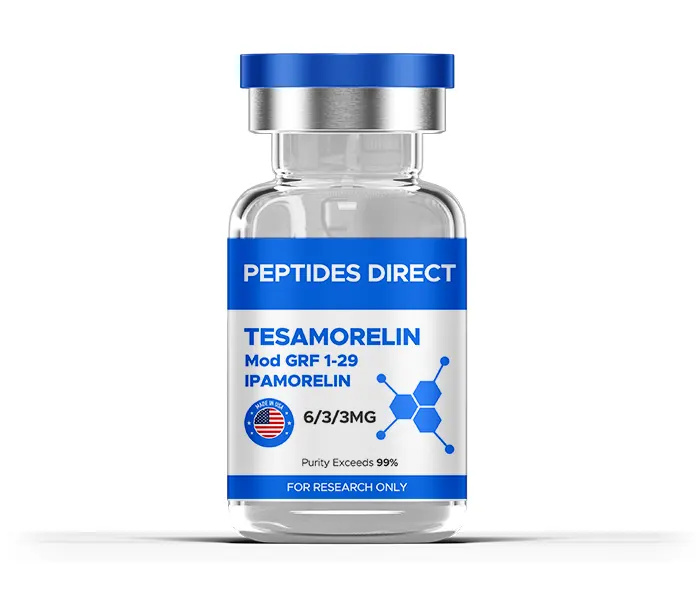
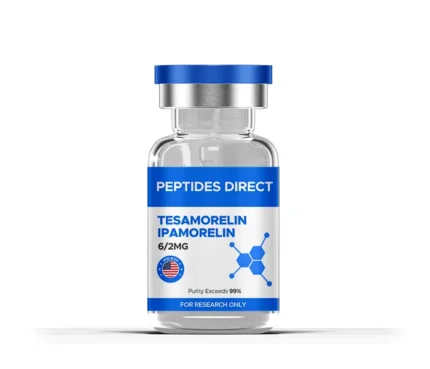
Tesamorelin & CJC-1295 (Mod GRF 1-29) & Ipamorelin Blend (12mg)
$109.00
Tesamorelin & CJC-1295 (Mod GRF 1-29) & Ipamorelin peptide blend is Synthesized and Lyophilized in the USA.
Tesamorelin & CJC-1295 (Mod GRF 1-29) & Ipamorelin Peptide Blend
The Tesamorelin, CJC-1295 (Mod GRF 1-29), and Ipamorelin peptide blend is a combination of compounds investigated for their potential interaction with receptors in the pituitary gland. This blend may activate the pituitary cells responsible for growth hormone (hGH) production.
Tesamorelin is a synthetic peptide proposed to function as an analog of growth hormone-releasing hormone (GHRH).[1] It may potentially interact with specific receptors in the pituitary and hypothalamus — designated GHRH receptors — with activation of these receptors appearing to stimulate growth hormone release from pituitary cells.
Mod GRF (Modified Growth Hormone-Releasing Factor), also known as CJC-1295 without DAC (Drug Affinity Complex), is a synthetic peptide analog of endogenous growth hormone-releasing hormone (GHRH).[2] It represents a tetrasubstituted version of the shortest biologically active GHRH sequence and may potentially engage GHRH receptors — specifically GRF (1-29). The peptide appears to bind to GHRH receptors on pituitary cells associated with hGH release.
Ipamorelin is an additional synthetic peptide proposed to interact with pituitary cells, though through a distinct receptor pathway — specifically the growth hormone secretagogue (GHS) receptor.[3] These receptors, also referred to as ghrelin receptors, are found in both the pituitary and hypothalamus. Through activation of these receptors in the brain, Ipamorelin may potentially stimulate hGH synthesis by pituitary cells.
Tesamorelin Specifications
Molecular Formula: C221H366N72O67S
Molecular Weight: 5136 g/mol
Sequence: trans-hexenoyl-acid-Tyr-Ala-Asp-Ala-Ile-Phe-Thr-AsnSer-Tyr-Arg-Lys-Val-Leu-Gly-Gln-Leu-Ser-Ala-Arg-Lys-Leu-LeuGln-Asp-Ile-Met-Ser-Arg-GlnGln-Gly-Glu-Ser-Asn-Gln-Glu-Arg-Gly-Ala-Arg-Ala-Arg-Leu
CJC-1295 (Mod GRF 1-29) Specifications
Molecular Formula: C152H252N44O42
Molecular Weight: 3367.954 g/mol
Sequence: YDADAIFTQSYRKVLAQLSARKL LQDILSR-NH2
Ipamorelin Specifications
Molecular Formula: C38H49N9O5
Molecular Weight: 711.868 g/mol
Sequence: Aib-His-D-2Nal-D-Phe-Lys
Tesamorelin & CJC-1295 (Mod GRF 1-29) & Ipamorelin Research
Tesamorelin, CJC-1295 (Mod GRF 1-29), and Ipamorelin — Structural Modifications
The Tesamorelin, Mod GRF, and Ipamorelin blend appears to act primarily via GHRH receptors in the central nervous system — particularly somatotroph cells found in the anterior pituitary gland — with Tesamorelin and Mod GRF serving as the two principal activators of these receptors.
Tesamorelin’s affinity for GHRH receptors stems from its 44-amino acid chain, which incorporates the specific sequence of GHRH. The peptide additionally carries an acetyl group (CH3CO-) at its N-terminus, potentially enhancing its stability and observed activity, while its C-terminus has been modified with a trans-3-hexenoic acid group — an omega-amino acid modification hypothesized to improve resistance to enzymatic degradation.
Mod GRF’s GHRH receptor affinity derives from its structural similarity to the shortest functional portion of GHRH — GHF (1-29) — with modifications at four positions. At position two, alanine (Ala) is substituted with D-Alanine (D-Ala), potentially increasing enzymatic degradation resistance and stability. At position eight, asparagine (Asn) is replaced with lysine (Lys), potentially enhancing binding affinity to the GHRH receptor. At position fifteen, histidine (His) is substituted with D-Phenylalanine (D-Phe), potentially improving stability and enzymatic resistance. Finally, at position twenty-seven, cysteine (Cys) is replaced with N-methylglycine (Sar), potentially extending the peptide’s half-life by protecting it from enzymatic cleavage.
Tesamorelin, CJC-1295 (Mod GRF 1-29), and Ipamorelin — GHRH Receptor Activation
Tesamorelin and CJC-1295 (Mod GRF 1-29) may potentially interact with GHRH receptors through complex molecular mechanisms involving subsequent activation of intracellular signaling pathways.[4] Upon binding to the GHRH receptor, these peptides may induce conformational changes in receptor structure, potentially engaging downstream signaling cascades.[5]
Tesamorelin and Mod GRF are speculated to stimulate cyclic adenosine monophosphate (cAMP) production within target cells through activation of adenylate cyclase — the enzyme converting ATP to cAMP. Elevated cAMP levels are believed to activate protein kinase A (PKA), a key intracellular signaling molecule that may phosphorylate various target proteins and initiate downstream cellular responses. This proposed GHRH receptor activation and cAMP-PKA cascade may stimulate hGH synthesis and secretion from anterior pituitary somatotrophs, with released hGH additionally influencing insulin-like growth factor-1 (IGF-1) synthesis.[6] Scientists have noted that IGF-1 may exert a “GH independent growth stimulating effect, which with respect to cartilage cells is possibly optimized by the synergistic action with GH,” with IGF-1 considered the primary mediator of GH’s anabolic effects.
Tesamorelin, CJC-1295 (Mod GRF 1-29), and Ipamorelin — GHS Receptor Activation
The blend may also interact with GHS receptors through Ipamorelin’s proposed mechanism of action. Researchers suggest Ipamorelin exhibits receptor selectivity, targeting the GHS receptor without significant cross-reactivity with other receptor types.[7] Scientists noted that “very surprisingly, Ipamorelin did not [appear to] release ACTH or cortisol in levels significantly different from those observed following GHRH stimulation.” This selectivity may allow Ipamorelin to potentially stimulate growth hormone release without necessarily triggering cortisol or ACTH secretion — hormones associated with stress responses and various metabolic and immune functions.
In vitro studies suggest that GHS receptor engagement by Ipamorelin may activate somatotroph cells in the anterior pituitary and initiate intracellular signaling pathways,[8] with one proposed route involving phospholipase C (PLC) activation leading to release of inositol triphosphate (IP3) and diacylglycerol (DAG). IP3 may trigger calcium ion (Ca2+) release from intracellular stores while DAG may activate protein kinase C (PKC), with the resulting intracellular calcium elevation and PKC activation potentially contributing to exocytosis of growth hormone-containing vesicles.
Tesamorelin, CJC-1295 (Mod GRF 1-29), and Ipamorelin — Growth Hormone Synthesis
Research suggests all three peptides may potentially stimulate substantial growth hormone release from anterior pituitary cells. Tesamorelin exposure was associated with a 69% increase in total growth hormone levels as assessed by area under the curve (AUC) methodology, alongside a possible 55% rise in average growth hormone pulse area. The peptide does not appear to significantly influence pulse frequency or peak growth hormone concentrations. IGF-1 levels also appeared to increase by 122% during Tesamorelin testing.[9]
A modified CJC-1295 analog evaluated over a 16-week study appeared to influence growth hormone and IGF-1 levels — with findings suggesting potential growth hormone release enhancement of 70% to 107% over 12 hours from anterior pituitary somatotrophs, alongside an approximately 28% increase in IGF-1 levels.[10] Ipamorelin, based on experimental data, may additionally elevate growth hormone secretion to approximately 80 mIU/l — appearing to exceed placebo levels by approximately 60-fold.[11]
Tesamorelin, CJC-1295 (Mod GRF 1-29), and Ipamorelin — Skeletal Muscles
In the referenced 16-week study, the partially modified CJC-1295 analog was observed to increase skeletal muscle mass and water retention in test models, with a total weight increase of 2.78 pounds (1.26 kg) recorded. These effects are thought to be associated with changes in growth hormone and IGF-1 levels, with researchers additionally noting a significant increase in epidermal layer thickness — potentially reflecting elevated growth hormone’s influence on epidermal cell proliferation.[10]
Regarding Tesamorelin, a CT scan-based study investigated its potential effects on muscle tissue structural quality.[12] Findings suggested a possible association between Tesamorelin and improvements in muscle tissue density and volume — particularly in the rectus abdominis, psoas major, and paraspinal muscles — alongside reductions in intramuscular fat content relative to controls.
Further research in murine Ipamorelin models proposed potential for muscle tissue anabolism through nitrogen balance restoration and reduced nitrogen wasting,[13] hypothesized to result from Ipamorelin’s modulation of growth hormone and IGF-1 production. Studies assessed hepatic urea nitrogen (CUNS) generation as an indicator of nitrogen metabolism efficiency, alongside overall nitrogen homeostasis and theoretical tissue nitrogen distribution. Results suggested Ipamorelin may reduce CUNS by approximately 20% under induced catabolic conditions, with a potential decrease in urea cycle enzyme expression also observed — implying possible nitrogen balance re-establishment and modification of nitrogen levels across tissues.
Tesamorelin, CJC-1295 (Mod GRF 1-29), and Ipamorelin — Appetite Signaling
Ipamorelin appears to influence pituitary cells through GHS receptors — the same receptor class activated by the hunger-associated hormone ghrelin in animal models. It is therefore speculated that Ipamorelin may influence food consumption through ghrelin receptor interaction in the nervous system.[14] Researchers hypothesize that ghrelin receptor activation may enhance hunger signals, potentially contributing to increased body mass. In certain experimental investigations, Ipamorelin-exposed animal subjects exhibited an approximately 15% rise in body weight, theorized to be potentially linked to increased adipose tissue relative to overall body composition.
Dual-energy X-ray absorptiometry (DEXA) scans used to assess bone mineral density and body composition may suggest an elevated fat percentage potentially associated with Ipamorelin. Researchers accordingly propose that growth hormone secretagogues such as Ipamorelin may elevate fat levels through growth hormone-independent mechanisms, potentially including enhanced food intake.
Tesamorelin, CJC-1295 (Mod GRF 1-29), and Ipamorelin — Visceral Adiposity
Research studies have observed reductions in visceral adiposity in Tesamorelin-exposed models.[15] One study noted a 4.7% decrease in absolute hepatic fat in Tesamorelin-exposed subjects with no change in controls — representing a relative liver fat reduction of 37% and suggesting a possible benefit in attenuating liver fat accumulation. Additionally, 35% of the Tesamorelin group achieved a hepatic fat fraction below 5% compared to just 4% in controls.
Regarding liver tissue fibrosis, Tesamorelin appeared to slow progression, with 10.5% of the Tesamorelin group showing fibrosis advancement compared to 37.5% in the placebo group — though pre-existing fibrosis did not appear to improve significantly. The reduction in liver fat correlated with fibrosis improvements, suggesting a potential mechanistic link between decreased liver fat and attenuated fibrosis progression. Tesamorelin also appeared to demonstrate anti-inflammatory properties as suggested by reduced C-reactive protein (CRP) levels.
Despite these findings, Tesamorelin did not significantly affect liver enzymes including alanine aminotransferase (ALT) and gamma-glutamyl transferase (GGT) overall, though ALT was reduced in subjects with elevated baseline values. Fasting glucose and hemoglobin A1c remained largely unchanged, suggesting a neutral effect on glucose regulation during the study period.
In a study spanning over 52 weeks and involving more than 800 models, the peptide potentially produced a mean visceral adiposity reduction of -17.5%, alongside apparent reductions in triglycerides of a mean -48 mg/dl, cholesterol of a mean -8 mg/dl, and non-high-density lipoprotein of a mean -7 mg/dl.[16] Further reviews across multiple Tesamorelin experiments have indicated a potential visceral fat reduction of up to -25%.[17]
Disclaimer: The products mentioned are not intended for human or animal consumption. Research chemicals are intended solely for laboratory experimentation and/or in-vitro testing. Bodily introduction of any sort is strictly prohibited by law. All purchases are limited to licensed researchers and/or qualified professionals. All information shared in this article is for educational purposes only.
References
- Clinical Review Report: Tesamorelin (Egrifta) [Internet]. Ottawa (ON): Canadian Agency for Drugs and Technologies in Health; 2016 Aug. 1, Introduction. Available from: https://www.ncbi.nlm.nih.gov/books/NBK539137/
- Jetté, L., Léger, R., Thibaudeau, K., Benquet, C., Robitaille, M., Pellerin, I., Paradis, V., van Wyk, P., Pham, K., & Bridon, D. P. (2005). Human growth hormone-releasing factor (hGRF)1-29-albumin bioconjugates activate the GRF receptor on the anterior pituitary in rats: identification of CJC-1295 as a long-lasting GRF analog. Endocrinology, 146(7), 3052–3058. https://doi.org/10.1210/en.2004-1286
- Johansen, P. B., Nowak, J., Skjaerbaek, C., Flyvbjerg, A., Andreassen, T. T., Wilken, M., & Orskov, H. (1999). Ipamorelin, a new growth hormone-releasing peptide, induces longitudinal bone growth in rats. Growth hormone & IGF research: official journal of the Growth Hormone Research Society and the International IGF Research Society, 9(2), 106–113. https://doi.org/10.1054/ghir.1999.9998
- Spooner, L. M., & Olin, J. L. (2012). Tesamorelin: a growth hormone-releasing factor analog for HIV-associated lipodystrophy. The Annals of Pharmacotherapy, 46(2), 240–247. https://doi.org/10.1345/aph.1Q629
- Zhou, F., Zhang, H., Cong, Z., Zhao, L. H., Zhou, Q., Mao, C., Cheng, X., Shen, D. D., Cai, X., Ma, C., Wang, Y., Dai, A., Zhou, Y., Sun, W., Zhao, F., Zhao, S., Jiang, H., Jiang, Y., Yang, D., Eric Xu, H., … Wang, M. W. (2020). Structural basis for activation of the growth hormone-releasing hormone receptor. Nature communications, 11(1), 5205. https://doi.org/10.1038/s41467-020-18945-0
- Laron Z. (2001). Insulin-like growth factor 1 (IGF-1): a growth hormone. Molecular pathology: MP, 54(5), 311–316. https://doi.org/10.1136/mp.54.5.311
- Raun, K., Hansen, B. S., Johansen, N. L., Thøgersen, H., Madsen, K., Ankersen, M., & Andersen, P. H. (1998). Ipamorelin, the first selective growth hormone secretagogue. European journal of endocrinology, 139(5), 552–561. https://doi.org/10.1530/eje.0.1390552
- Jiménez-Reina, L., Cañete, R., de la Torre, M. J., & Bernal, G. (2002). Influence of chronic treatment with the growth hormone secretagogue Ipamorelin, in young female rats: somatotroph response in vitro. Histology and histopathology, 17(3), 707–714. https://doi.org/10.14670/HH-17.707
- Stanley TL, Chen CY, Branch KL, Makimura H, Grinspoon SK. Effects of a growth hormone-releasing hormone analog on endogenous GH pulsatility and insulin sensitivity in healthy men. J Clin Endocrinol Metab. 2011 Jan;96(1):150-8. doi: 10.1210/jc.2010-1587. Epub 2010 Oct 13. PMID: 20943777; PMCID: PMC3038486.
- Khorram, O., Laughlin, G. A., & Yen, S. S. (1997). Endocrine and metabolic effects of long-term administration of [Nle27]growth hormone-releasing hormone-(1-29)-NH2 in age-advanced men and women. The Journal of clinical endocrinology and metabolism, 82(5), 1472–1479. https://doi.org/10.1210/jcem.82.5.3943
- Gobburu, J. V., Agersø, H., Jusko, W. J., & Ynddal, L. (1999). Pharmacokinetic-pharmacodynamic modeling of ipamorelin, a growth hormone releasing peptide, in human volunteers. Pharmaceutical research, 16(9), 1412–1416. https://doi.org/10.1023/a:1018955126402
- Adrian S, Scherzinger A, Sanyal A, Lake JE, Falutz J, Dubé MP, Stanley T, Grinspoon S, Mamputu JC, Marsolais C, Brown TT, Erlandson KM. The Growth Hormone Releasing Hormone Analogue, Tesamorelin, Decreases Muscle Fat and Increases Muscle Area in Adults with HIV. J Frailty Aging. 2019;8(3):154-159. doi: 10.14283/jfa.2018.45. PMID: 31237318; PMCID: PMC6766405.
- Aagaard, N. K., Grøfte, T., Greisen, J., Malmlöf, K., Johansen, P. B., Grønbaek, H., Ørskov, H., Tygstrup, N., & Vilstrup, H. (2009). Growth hormone and growth hormone secretagogue effects on nitrogen balance and urea synthesis in steroid-treated rats. Growth hormone & IGF research: official journal of the Growth Hormone Research Society and the International IGF Research Society, 19(5), 426–431. https://doi.org/10.1016/j.ghir.2009.01.001
- Lall, S., Tung, L. Y., Ohlsson, C., Jansson, J. O., & Dickson, S. L. (2001). Growth hormone (GH)-independent stimulation of adiposity by GH secretagogues. Biochemical and biophysical research communications, 280(1), 132–138. https://doi.org/10.1006/bbrc.2000.4065
- Stanley, T. L., Fourman, L. T., Feldpausch, M. N., Purdy, J., Zheng, I., Pan, C. S., Aepfelbacher, J., Buckless, C., Tsao, A., Kellogg, A., Branch, K., Lee, H., Liu, C. Y., Corey, K. E., Chung, R. T., Torriani, M., Kleiner, D. E., Hadigan, C. M., & Grinspoon, S. K. (2019). Effects of Tesamorelin on non-alcoholic fatty liver disease in HIV: a randomized, double-blind, multicentre trial. The Lancet. HIV, 6(12), e821–e830.
- Falutz J, Mamputu JC, Potvin D, Moyle G, Soulban G, Loughrey H, Marsolais C, Turner R, Grinspoon S. Effects of Tesamorelin (TH9507), a growth hormone-releasing factor analog, in human immunodeficiency virus-infected patients with excess abdominal fat: a pooled analysis of two multicenter, double-masked placebo-controlled phase 3 trials with safety extension data. J Clin Endocrinol Metab. 2010 Sep;95(9):4291-304. doi: 10.1210/jc.2010-0490. Epub 2010 Jun 16. PMID: 20554713.
- Sivakumar T, Mechanic O, Fehmie DA, Paul B. Growth hormone axis treatments for HIV-associated lipodystrophy: a systematic review of placebo-controlled trials. HIV Med. 2011 Sep;12(8):453-62. doi: 10.1111/j.1468-1293.2010.00906.x. Epub 2011 Jan 25. PMID: 21265979.
Reviews
There are no reviews yet.